
Which Exercises Place Stress On An ACL Graft And Does It Matter?
I almost stopped writing this post pretty early on because it quickly became apparent that finding an answer to this question isn’t cut and dry. The question I posed in the title has two main components: 1) which exercises place stress on the ACL graft and 2) to what degree does placing stress on the ACL graft contribute to positive and/or negative outcomes.
The first part of this question is easy enough to answer, as there has been a lot of research done to quantify how much strain almost every imaginable exercise places on the ACL. Compared to research on the second half of the question, this research is ubiquitous because you are simply collecting data from participants (or computer models) and are not risking re-injury of subjects or finding inconclusive results because of a lack of data.
Why Determining If ACL Laxity Contributes to Poor Outcomes Is Difficult
The second part of the question – to what degree does placing stress on the ACL graft contribute to the outcomes – is much harder to answer, and I’ll try to explain why. First off, define a negative outcome? The primary concern therapists and surgeons have with placing stress on the graft is that it will stretch out the graft (aka increase the laxity of the graft), which makes it less effective at providing stability to the knee. However, what if you stretch the graft out because you are performing a high-intensity exercise program aimed at strengthening the quadriceps, and this improvement in strength outweighs the drawback of stretching out the ACL when it comes to overall outcomes and risk of re-injuring the ACL?
The risk of re-injury is especially difficult to answer. Think about it this way: if you split 100 people post-ACL surgery into 2 groups and have 1 group perform high-intensity quadriceps exercises fairly early in rehab (which may increase laxity of the ACL graft) while the other group waits until later in rehab to start these exercises (which may reduce laxity of the graft), the only way you will truly know which group is better off is to compare the rate of re-injury between the two groups… but the rate of re-injury is typically less than 10%, so you would only expect 5 or less subjects in each group to re-injure their ACL.
Let’s say that 2 people in the early exercise group re-injure their ACL and 4 people re-injure their ACL in the late exercise group. Can we draw any conclusions from this? Probably not: the odds that this finding is due to chance is incredibly high and the injuries may not even be due to differences in laxity.
In order to find a conclusive answer about whether or not stretching out the ACL graft during the rehab process – either as the result of exercises aimed at improving function or inadvertently – results in a greater risk of re-injury, you would have to perform a study with hundreds of individuals post-ACL surgery, periodically measure the laxity in the ACL graft, and then see if there was any correlation between graft laxity and risk of re-injury. If you wanted to perform an even stronger study, you would split the subjects into two groups, have one group perform exercises that are known to place strain on the ACL graft while the other group performs exercises that don’t strain the ACL graft, measure the amount of laxity before the subjects prior to returning to sports/high-intensity activity, and then measure the rate of re-injury.
What I’m trying to say is that the amount of money required to provide a definitive answer to these questions would require the budget typically reserved for pharmaceutical trials, which means it will likely never be done. As you’ll see below, some researchers have tried to skirt around this problem by performing systematic reviews, but by their own admittance the quality of the evidence they retrieved from multiple studies is still low.
Now that I’ve thoroughly let you down, let’s start trying to answer this question by examining what we know about which exercises place strain on the ACL graft and how this affects graft laxity.
What Exercises/Activities Place Stress on the ACL?
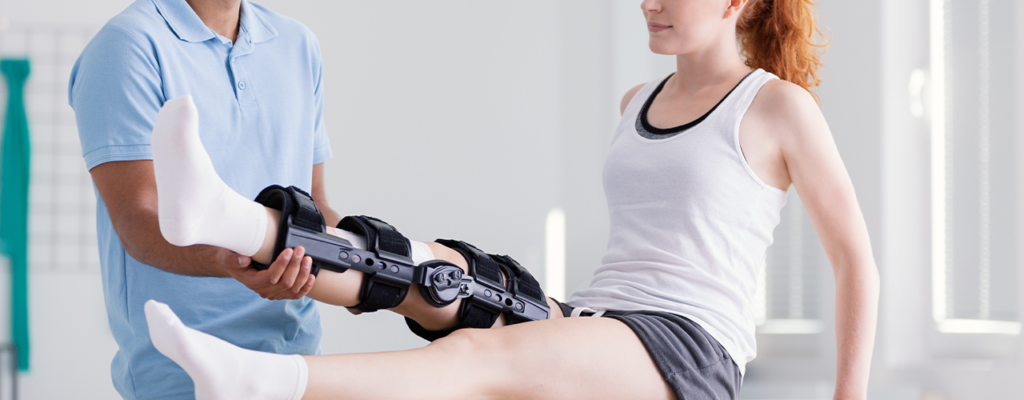
Let’s start by examining which exercises place the most strain on the ACL graft. The best overview on this research comes from an article published in JOSPT in 2012, and all of the examined exercises have some component of resisted knee extension (if an exercise involves resisted hamstring flexion, there will be no stress placed on the ACL). While this article is well worth reading yourself, I will try and pull out some of the main takeaways. Before we look at this article, we need to define a couple of terms first: non-weight bearing (NWB) and weight bearing (WB) exercises. NWB exercises are exercises where the feet are not in contact with the ground or a similar surface when performing an exercise; these are also referred to as open kinetic chain (OKC) exercises. The most common example of this type of exercise is a long arc quads, and pretty much all NWB exercises are some sort of variation of this movement. On the other hand, weight bearing exercises encompass almost every other exercise, including squats, leg presses, deadlifts, biking, etc. These are also referred to as closed kinetic chain (CKC) exercises.
There was one main similarity between NWB and WB exercises, which is that performing exercises that involve quadriceps activation between 10 and 50 degrees of knee flexion (knee is relatively straight) places more strain on the ACL than performing these exercises between 50 and 90 degrees of flexion. In fact, if you perform exercises with greater than 60 degrees of knee flexion, there is NO load placed on the ACL (this is a surprising finding, but apparently this finding has been replicated and appears to be pretty solid).
That’s pretty much where the similarities end. NWB exercises generally place more force on the ACL than WB exercises, and the degree of forces INCREASES with increased resistance when performing NWB exercises and DECREASES with increased resistance when performing WB exercises. This is because WB exercises typically involve co-contraction of the hamstrings in order to perform the exercise, which places a posteriorly-directed force on the tibia (shin bone) that counteracts the anteriorly-directed force on the tibia from the quadriceps. For example, if you are performing a barbell squat and add 100# to the bar, you must recruit your hamstrings to help stabilize your leg, in addition to recruiting more of your quadriceps; this increase in both forces essentially cancels each other out, leading to no increase in strain on the ACL or even a small decrease in strain. On the other hand, if you are performing a seated knee extension exercise and add weight to the machine, you are simply recruiting more of your quadriceps and lack the hamstring activation that counteracts the quadriceps force.
WB exercises also result in greater gluteal muscle activation in order to stabilize the hip and leg, which does not occur when performing NWB exercises. WB exercises – especially exercises like squats and deadlifts – also require trunk flexion for proper performance, which contributes to an increase in hamstring activation. Finally, WB exercises help improve proprioception, which is important for restoring balance and stability in the injured leg.
It seems pretty clear to me that WB exercises are necessary for adequate outcomes after ACL surgery, and it might sound like I’m bashing on NWB exercises, but I’m not. NWB exercises are crucial for adequate performance of certain tasks, such as kicking a soccer ball, walking, and running. In addition, overall quadriceps strength is a good predictor of outcomes after ACL surgery, and NWB exercises can very effectively improve quadriceps strength. The question is timing: how early in rehab should you begin to perform NWB exercises, and when should you perform these exercises with resistance? That’s the next question.
Does the Early Incorporation of NWB Exercises Following ACL Surgery Contribute to Better or Worse Outcomes?
There are a couple ways to try and answer this question. The first way is to look at actual re-injury rates among people with and without laxity in their ACL graft – I was not able to find any research that attempted to answer this question – and the second is to look at objective data and subjective reports from patients about how well they feel they are doing after ACL surgery.
There has been at least one systematic review done with data relating to the second question. This review included studies that compared a group that performed NWB exercises during the first 6 weeks of surgery to a control group that only performed WB exercises during this period. After pooling together the results from the various studies, they found that the groups that performed NWB exercises had slight increases in laxity compared to the WB group, especially if a hamstring graft was used. However, these results did not reach statistical significance and the authors concluded that at present, there is no evidence that performing NWB exercises early in rehab leads to clinically meaningful laxity (in the next section we’ll talk a little more about what “clinically meaningful laxity” means). In addition, this review also found that there were no significant differences in strength between groups, although the results were mixed on this, and some studies found greater quad strength in the NWB exercise group. The review also found no differences in patient-reported function or function with objective testing. Last but not least, four of the included studies included adverse events, which found a total of 4 graft failures in the early NWB group compared to 2 graft failures in the WB group; this finding could be due to chance and/or be unrelated to laxity and quad strength.
Overall, the quality of evidence presented in the studies used in this review was rated low to very low, which is a common problem in therapy research and comes back to my point at the top that it is very difficult to perform high-quality research that will definitively answer the questions at hand. In addition, the studies used in these reviews tend to have significant procedural differences, which makes it difficult to pool them together and come up with a cohesive answer.
Does ACL Graft Laxity Predict Poor Long-Term Outcomes?
To finish up, let’s step back and try and answer the question of whether or not it matters if you have some laxity in the ACL graft once you’ve completed rehab. The best study I found on this examined over 400 subjects at 2 years post-ACL surgery to determine if there was a correlation between ACL laxity and subjective and objective outcomes. This study separated subjects into 3 groups based on the degree of laxity found, which we can term as mild (less than 2mm difference compared to the uninjured side), moderate (3-5mm difference compared to the uninjured side), and severe (6-10mm difference compared to the uninjured side). The good news is that over 90% of ACLs were rated as mild or moderate for all of the different laxity tests they performed (Lachman test, Pivot-shift test, and KT-1000 testing) and there was NO ASSOCIATION between increased laxity in the moderate group (vs. the mild group) and poor self-reported patient outcomes.
It’s important to note that while the above study would be termed a “long-term follow-up”, the follow-up period was still relatively short compared to the duration of the pt’s life. Another study examined the correlation between ACL laxity at 2 years post-surgery and evidence of degeneration of the knee joint at 5-9 years post-surgery and found that individuals that had evidence of rotational laxity (there are two types of laxity in the ACL, rotational and anterior-posterior, that I did not want to get into the weeds with in this post) at 2 years post-surgery had evidence of more degenerative changes during the 5-9-year follow-up. To me, this indicates that while a little bit of increased laxity during the first couple of years post-surgery might not lead to worse outcomes or risk of re-injury in the near term, it’s possible that it will lead to poorer outcomes later in life that will require interventions like a total knee replacement.
Fun fact: knee hyperextension pre-surgery is a predictor of quality of outcomes following ACL surgery, and if you have knee hyperextension, a patellar graft provides better results.
Summary
Unfortunately, there is no robust data to definitively answer the question of whether or not there are certain exercises that increase the risk of developing laxity in the ACL graft after surgery, and there is also no great answer on whether or not a mild-moderate increase in laxity leads to worse outcomes. What we do know is that NWB exercises place more stress on the ACL graft than WB exercises, but this increased strain may only lead to a mild increase in laxity that isn’t meaningful. In addition, any negative effect of this increased strain may be outweighed by greater improvements in quadriceps strength that NWB exercises can provide compared to WB exercises.
We also have low-quality evidence that the early incorporation of NWB exercise into an exercise routine post-surgery (within 6 weeks) does not produce significant differences in laxity, strength, self-reported outcomes, or objective outcomes compared to a group that only performs WB exercises during that time frame. Since these are all low evidence, I would not be surprised if some day we find actual differences between the two groups.
Last but not least, we do have some evidence that even if some laxity is present, it likely does not contribute to poor outcomes in the “near” long-term (measured in years), but probably does contribute to poor outcomes like osteoarthritis in the “far” long-term (measured in decades).
Personally, I am currently 5 weeks post-ACL surgery and am beginning to incorporate more NWB exercises like long-arc quads into my exercise routine. I have also been performing forwards and backwards walking in water, and if you’ve never done this when your knee is injured, it will be hard to believe just how much resistance the water gives to your leg when walking forwards – it definitely counts as a NWB exercise. One thing I’ve noticed is that I am able to walk a lot better after performing these NWB exercises, and I especially notice an improvement in knee extension during terminal swing (the moment right before your foot hits the ground). WB exercises like squats, deadlifts, leg press, and kettlebell swings are another staple of my routine and I seem to be receiving good results from those as well. I wish you the best of luck if you’re in the middle of rehab or about to have surgery.
Western Slope Rehab and Performance is Here to Help
If you are struggling with injuries or have recently been in a motor vehicle accident, we can help. We are a physical therapy company that provides home-based orthopedic services in the Grand Junction, CO, area, as well as telehealth appointments throughout Colorado. If you would like to schedule a free consultation, you can call us as 970-462-9177, or fill out our contact form here.
If you found this post valuable, please like and share on our Facebook page, which is updated regularly with new content.