

How to Recover From a Kimura Shoulder Injury
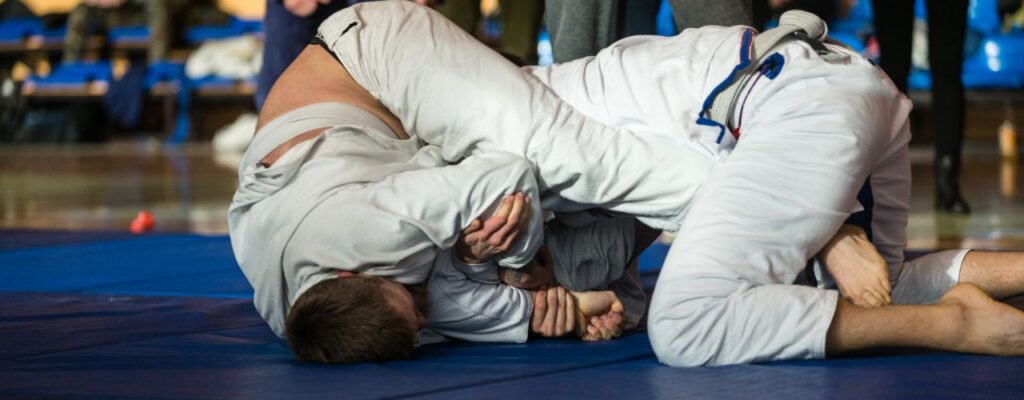
This week we’re continuing our examination of arm locks by looking at the Kimura and the injuries it can cause in the shoulder. Like the Americana, the two primary locations of injury will be the shoulder and the elbow. Unfortunately, Kimura injuries are less cut and dry than Americana injuries for a couple reasons: 1) there is a lot less research on the biomechanics of the shoulder as it rotates in (Kimura) compared to as it rotates out (Americana) and 2) the Kimura can be accomplished from a wider variety of shoulder positions (e.g. the shoulder is extended more if you hit a Kimura from guard when compared to hitting it from side control). Let’s get started.
Kimura Relevant Anatomy
Before we describe the relevant structures, we need to make sure we are on the same page regarding basic shoulder motions.
- Abduction: arm out to side at 90 degrees
- Internal rotation: bring hand to floor with arm in 90 degrees of abduction and the elbow bent 90 degrees
- External rotation: bring hand to ceiling with arm in 90 degrees of abduction and the elbow bent 90 degrees
- Kimura: Abduction + internal rotation
- Americana: Abduction + external rotation
Thankfully, it should be very difficult to dislocate your shoulder with a Kimura, so I will not be addressing the joint itself in this post (if you’ve seen this happen, let me know). The typical mechanism for a posterior shoulder dislocation (which is the only one of concern with a Kimura) is internal rotation combined with bringing the arm across the body, whereas a Kimura brings the arm to the side or behind the body. This leaves the muscles and ligaments to worry about.
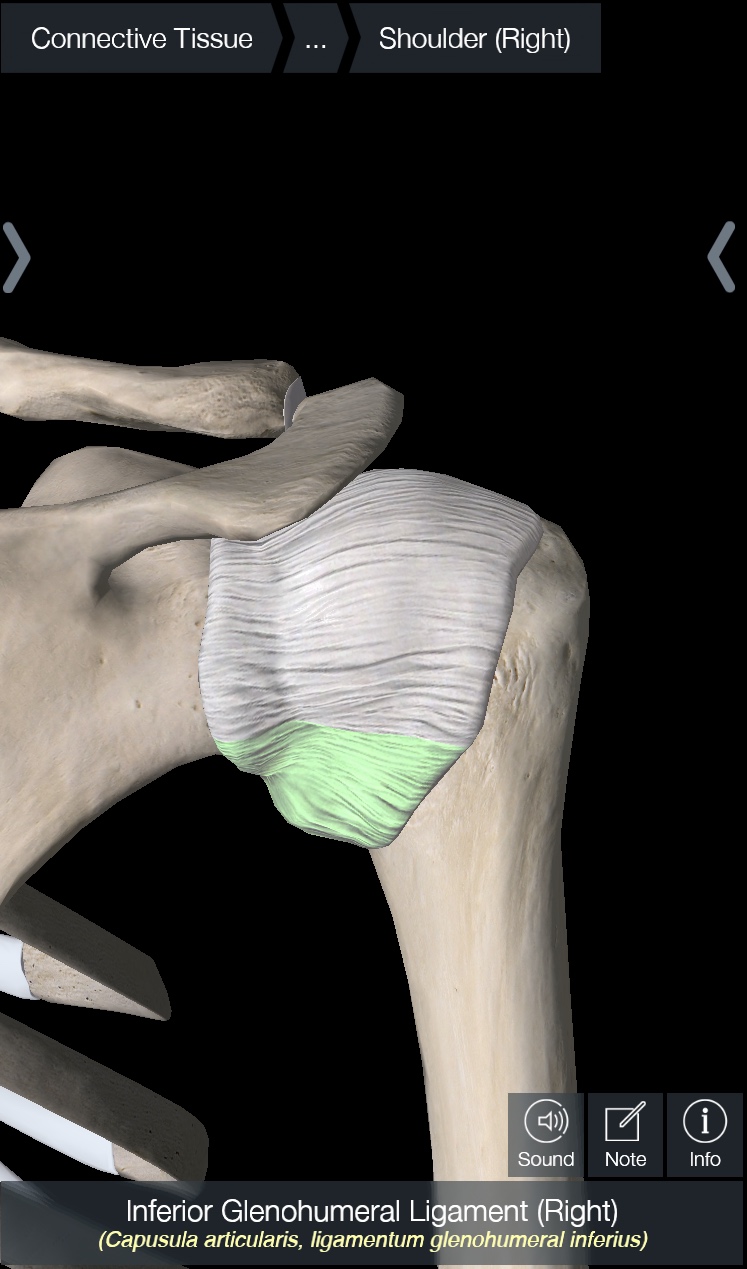
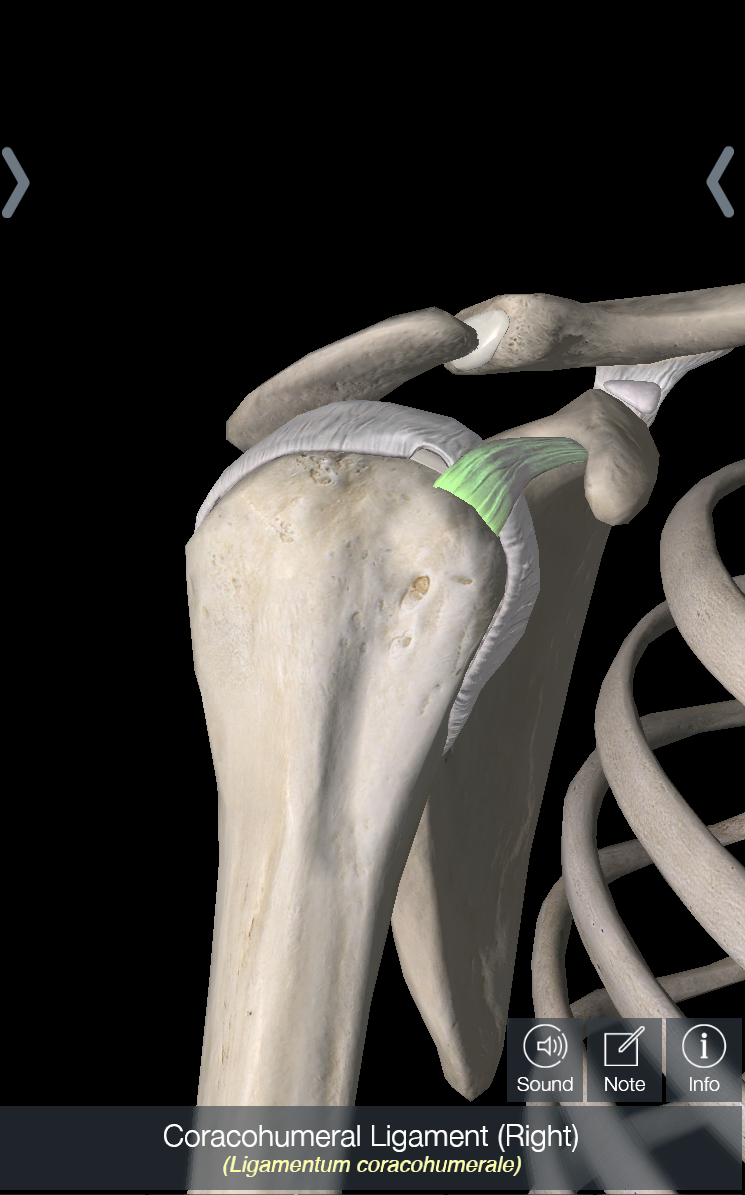
We need to worry more about ligaments than muscles when considering Kimura injuries, and there are 3 that we need to the look at: the posterior band of the inferior glenohumeral ligament (PB-IGHL), the coracohumeral ligament, and the acromioclavicular (AC) joint capsule. The PB-IGHL is located over the bottom 1/3 of the posterior (back) aspect of the shoulder joint and is part of the collection of ligaments that surround the shoulder joint, which is collectively called the capsule. The coracohumeral ligament begins on the coracoid process, which is part of the shoulder blade, travels across the front of the shoulder, and attaches on the outside of the humerus (upper arm bone). The AC joint is where the top of the shoulder blade (acromion) and the collarbone (clavicle) meet.
In the pictures below, picture 1 is looking at the back side of the shoulder, with the PB-IGHL highlighted; picture 2 is looking at the front side of the shoulder, with the coracohumeral ligament highlighted; and picture 3 is taken from the outside of the shoulder, with the shoulder blade to the left, the clavicle to the right, and the humerus below.

Kimura Mechanism of Action
Like I mentioned at the top, there is very little research on what is injured in a Kimura; however, I was able to find one study that examined what injuries occurred over the course of 5 jiu jitsu tournaments. This study found 2 injuries occurred from a Kimura: a grade 1 AC joint sprain and a sprain of the UCL in the elbow. A grade 1 AC sprain means that there was a stretching of the ligaments that surround the joint, but they were not torn; presumably, this person could have injured the AC joint more if they hadn’t tapped, which would have begun to actually tear the AC joint capsule, which can lead to instability.
Since I could not find any other research on shoulder injuries from a Kimura, the rest is based on research that examines the biomechanics of the shoulder. One study found that when the shoulder is placed into a combination of abduction and internal rotation, the PB-IGHL and the coracoacromial ligament share the brunt of the force. This can lead to a sprain of one or both ligaments, which can lead to instability of the shoulder if the damage is severe enough. I read a quote once that was attributed to one of the Gracie’s that says something along the lines of “you’ll be off the mats 6 days if you tap to a Kimura and 6 months if you don’t.” I think he’s right.
Another possibility that doesn’t fit nicely into either the shoulder or the elbow is breaking your humerus, which is what happened when Frank Mir caught Antonio Rodrigo Nogueira in a Kimura. If your break your humerus, it is unlikely that it will be a small break because rotational forces typically result in spiral fractures, which are nasty. If this occurs, you will likely need to wear a sling for 1-2 months and possibly undergo surgery to reposition the bone. Even more reason to tap.
How to Recover from a Kimura Injury
1. As always, don’t reinjure the shoulder by getting caught in another Kimura. This also means avoiding other activities that can aggravate the shoulder, such as throwing a ball or falling onto an outstretched arm.
2. Use this ACE wrap technique when rolling to pull the shoulder into EXTERNAL rotation, to help prevent too much internal rotation.
3. Begin working on shoulder internal and external rotation strengthening exercises to help restore stability to the shoulder. If you damaged any of the ligaments, they will take 6-8 weeks to heal (possibly longer), which means you will need the muscles to create more stability in the meantime. You can find the basic exercises here, but I recommend working with a physical therapist to create a personalized plan.
4. You will likely experience increased tone and guarding in the muscles surrounding the shoulder as they work to try and protect the joint. This is helpful initially but eventually it does not serve any purpose other than to cause more pain. I recommend working with a massage therapist, physical therapist, or a similar practitioner to help with these problems.
I hope you found this post on Kimura shoulder injuries informative. If you are having difficulty recovering from a Kimura, it is worth seeing a physical therapist for an additional opinion and treatment to get you back on the mats. If you live in the Grand Junction area, feel free to give me a call for a free consultation to see what we can do.