
How to Recover from Tennis Elbow
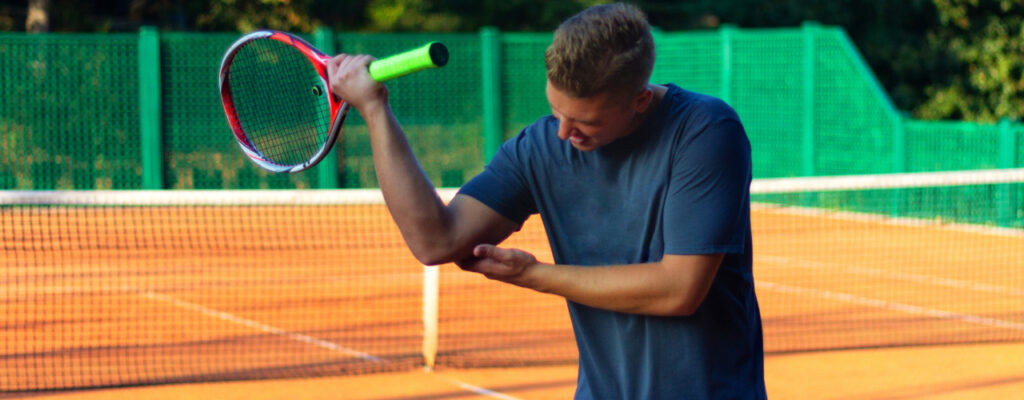
Tennis elbow is one of the most common injuries among tennis players. The pain typically occurs in the elbow and top of the forearm and is aggravated by any gripping or lifting movements, and most importantly, by most tennis strokes. While very painful to deal with, there are tried and true methods for addressing the core problems and getting you back on the court pain-free.
What is Tennis Elbow?
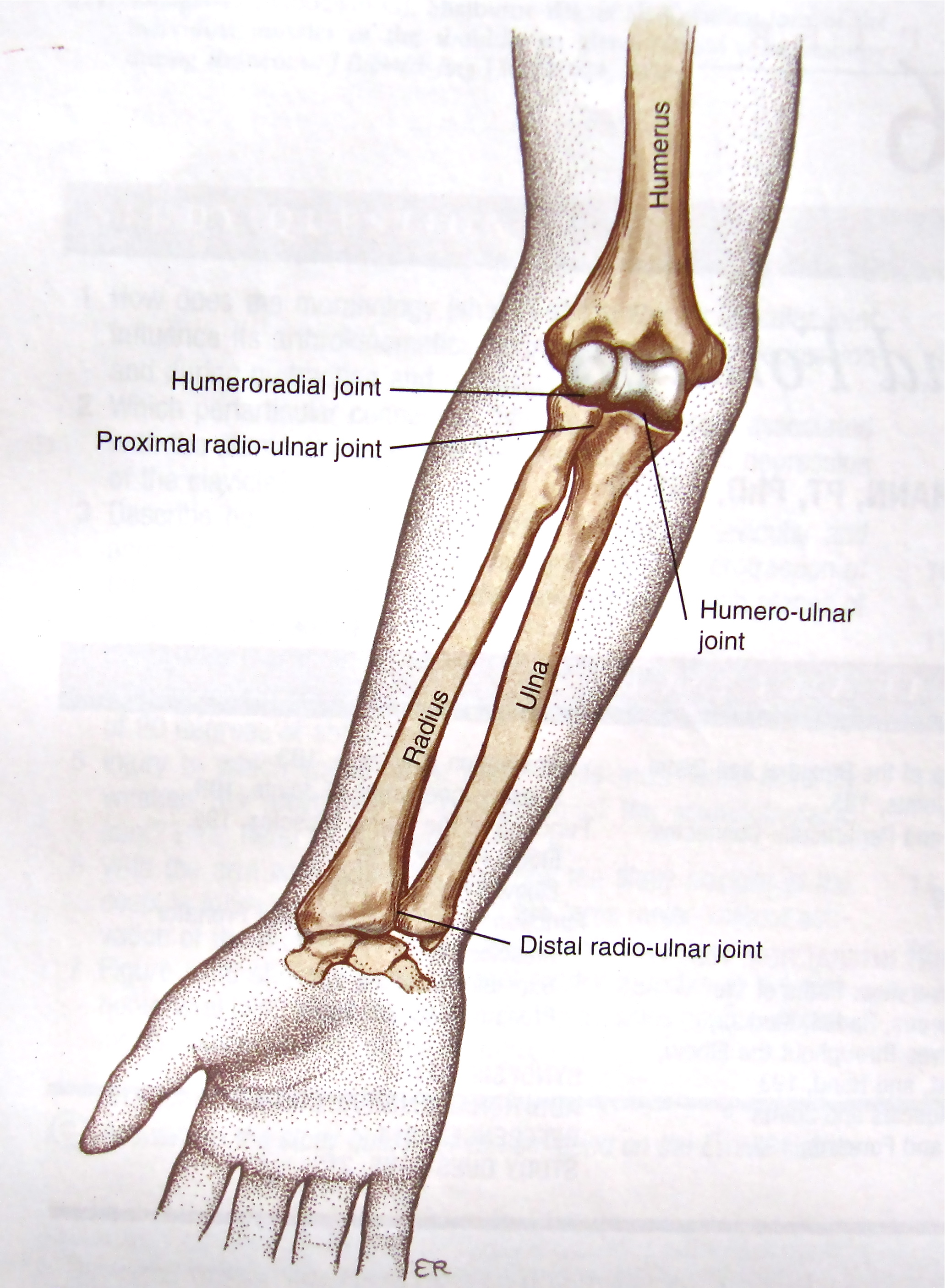
To understand what tennis elbow is, let’s break down its technical name – lateral epicondylopathy. The suffix, -opathy, refers to dysfunction, and in this case, it is dysfunction of the lateral epicondyle. As you can see in the pictures below, the lateral epicondyle is the outermost bone of your elbow and is the point where all the muscles that extend your wrist attach (the 2nd picture is looking at your right elbow from the back side with the palm facing forward, whereas the 1st picture is looking at your right elbow from the front side). With this anatomy in hand, tennis elbow refers to an irritation of the tendons of the wrist extensors as they attach onto the lateral epicondyle.

Tennis Elbow Mechanism of Action
Tennis elbow occurs due to overuse of the wrist extensor tendons. In tennis players, the most likely reason this happens is due to something called eccentric force. To understand this, think about the follow through of a serve. As your racket comes down across your body after hitting the ball, your wrist is flexing (the palm is moving toward your forearm) and the wrist extensors – the muscles we are concerned about – are working to slow down how fast your wrist is flexing; this type of force, where a muscle is contracting while lengthening, is called eccentric force. If you are a lifter, you may be aware that one of the best ways to break down a muscle is to perform eccentric movements, and the same is true in tennis. If you hit 200 serves in a day and aren’t used to doing that much, you can break down the muscles and tendons in the wrist extensors quite a bit; if you do that for a few days straight, such as when playing a tournament, that damage becomes too much for your body to manage and begins to damage part of the tendon.
How to Recover from Tennis Elbow
What I just said about damage to the tendon might sound scary, but take heart, it is possible to make a full recovery, with no pain and a return of all the strength you had before the injury.
One of the most important concepts when dealing with a tendinopathy (tennis elbow is a part of this family of injuries) is to “treat the doughnut, not the hole.” In this case, the “hole” is the damaged part of the tendon, and the “doughnut” is the healthy part of the tendon. In most cases, the damaged part of the tendon is going to die off, leaving you with only the healthy part of the tendon remaining. If all you do with this type of injury is ice and massage it, you have only treated the “hole”, and are predisposing yourself to more problems in the future.
Instead, what you need to do is begin strengthening the healthy tendon with progressively heavier loads; specifically, you need to strengthen wrist extension. While this movement will be painful, it is critical to begin this strengthening as soon as possible after the injury. If you choose an appropriate weight, which a physical therapist can help you with, you are not in danger of worsening your injury. In addition, there are certain techniques that a physical therapist can perform while you are performing the strengthening that will make it less painful while still reaping all the benefits of the exercise.
There are a couple other things you can do that will help your recovery from tennis elbow. The first is to begin using a cho pat strap when playing tennis. This strap attaches right below your elbow and reduces the force being placed through the elbow extensor muscles, which leads to less pain and injury.
A physical therapist can also help you with a variety of modalities. Massage, dry needling, and cupping can be very effective for decreasing your pain and relieving tone in the musculature, which can in turn take some of the pressure off of the tendons. A physical therapist will likely also find other musculature that is weak, especially in the shoulder area, and teach you how to strengthen these areas as you work on healing your elbow.
Summary
Tennis elbow is a very treatable condition that occurs due to overuse of the tendons of the wrist extensor muscles. The most important concept for treating this condition and keeping it from returning is to strengthen the wrist extensors. It can be very helpful to see a movement expert, such as a physical therapist, in order to teach you how to do this appropriately while providing other therapies to help you get back on the court as soon as possible.
I hope you found this post on tennis elbow informative. If you are having difficulty recovering from tennis elbow, it is worth seeing a physical therapist for an additional opinion and treatment to get you back on the court.
Anatomy image taken from Essential Anatomy 5
Western Slope Rehab and Performance is Here to Help
If you are struggling with injuries or have recently been in a motor vehicle accident, we can help. We are a physical therapy company that provides home-based orthopedic services in the Grand Junction, CO, area, as well as telehealth appointments throughout Colorado. If you would like to schedule a free consultation, you can call us as 970-462-9177, or fill out our contact form here.
If you found this post valuable, please like and share on our Facebook page, which is updated regularly with new content.