
How to Avoid Injuries During Ski Season in Colorado
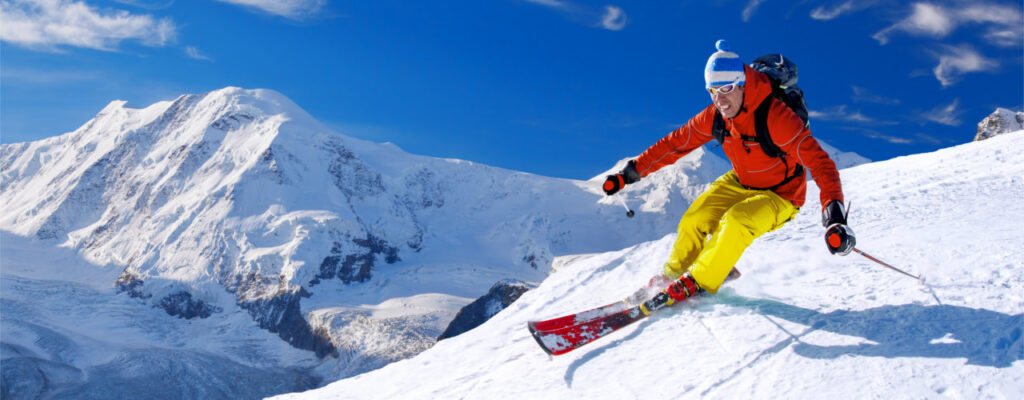
As an avid skier, I know firsthand how devastating an injury can be right in the middle of ski season (especially when Keystone or Vail get 16” of snow over the weekend). Even if you don’t suffer a big injury like a broken bone or ruptured ACL, nagging muscle and joint pain can make skiing difficult and downright unenjoyable sometimes. Here are a few tips to follow to stay healthy for the entire season.
1. Stay active while off the slopes
One of the most common types of ski injuries I see is the “weekend warrior” injury. One of the main reasons people injure themselves while skiing is that they are inactive all week and then try and ski for 8 hours on Sunday. While this might work out alright a couple of times, your muscles and joints have a hard time responding to the demands of skiing if they are only being stressed once a week. I have seen countless instances of people hitting the slopes for a long day over the weekend and then booking an appointment the next week for knee or back pain. Don’t let this be you.
Instead, aim to get in at least 3 good workouts throughout the week. This can take the form of running, lifting weights, or just doing a bodyweight workout in your house. Regardless of what type of exercise you decide to do, performing activities that place forces on the body that are similar to what you experience with skiing will prevent the majority of overuse injuries.
2. Warm up before getting on the lift
There’s no better recipe for an injury than driving 2 hours, hastily putting your gear on, and walking straight to the lift to beat the lines. Instead of jumping straight on the lift, take a couple minutes to perform a dynamic warm-up, like this one here. Not only will this help to warm your body up, but it will also help improve your comfort level in your boots, which always feel a little clunky at first if you haven’t skied in a while.
3. Start with a few easy runs
This almost goes without saying, but it’s rarely a good idea to start with the moguls through the trees on the back side of the mountain. Instead, start with a couple blues or greens, depending on your skill level, and level up from there. Not only will this help prevent injury but will also boost your confidence and likely lead to a better day of skiing overall.
4. Stay hydrated
If you just completed that 2-hour drive to Vail and the only thing you’ve drank all morning is coffee, you’re setting yourself up for an injury (to be clear, I have nothing against coffee). Dehydration affects your body in many ways, including decreasing the resilience of tendons, decreasing muscle force output, and impairing decision making and reaction time. Start your day with at least 16 ounces of water, and as an added bonus, add some form of electrolyte powder (my favorite is this one). This will help improve the absorption of the water, while also helping you hold it on the drive (we’ve all been there). Even if you can’t drink water throughout the day when skiing, this will give you a big leg up in your quest to stay healthy.
We’re Here to Help
Every year can’t be perfect, and if you do end up getting injured, we’re here to help. Our team of therapists specializes in the treatment of skiing injuries and we want nothing more than to get you back to the slopes in as little time as possible. If you’re dealing with a nagging injury that’s eating away at your season, give us a call for a free consultation!
Western Slope Rehab and Performance is Here to Help
If you are struggling with injuries or have recently been in a motor vehicle accident, we can help. We are a physical therapy company that provides home-based orthopedic services in the Grand Junction, CO, area, as well as telehealth appointments throughout Colorado. If you would like to schedule a free consultation, you can call us as 970-462-9177, or fill out our contact form here.
If you found this post valuable, please like and share on our Facebook page, which is updated regularly with new content.