
Breaking the Cycle: How Dry Needling Helps Chronic Pain
Living with persistent discomfort can take a serious toll on everyday life. For those seeking lasting relief, dry needling for chronic pain has become a valuable tool used in many physical therapy settings. This technique targets tight muscles and trigger points that may contribute to long-standing pain conditions. Patients often find that combining dry needling with guided rehabilitation provides meaningful improvements in mobility and function.
This FAQ answers common questions about dry needling, how it fits into physical therapy care, and what to expect during treatment.
Your Dry Needling Questions Answered
What Exactly Is Dry Needling and Why Does It Work?
Dry needling is a physical therapy technique that uses very thin, sterile needles inserted into tight or overactive muscles, also known as trigger points. These points can develop from overuse, injury, or poor posture and may contribute to localized or referred pain.
The goal is to release muscle tension, reduce pain signals, and restore normal movement. Unlike acupuncture, which is based on traditional Chinese medicine, dry needling is rooted in modern Western anatomy and clinical research. It is one of several strategies physical therapists use to help patients recover from chronic musculoskeletal conditions.
Is Dry Needling a Risk-Free Option?
Yes, when performed by a licensed and trained physical therapist, dry needling is considered a safe and well-tolerated technique. The needles used are very fine and do not inject any substances into the body. Most patients feel a mild ache, twitch, or pressure during treatment, followed by relief of symptoms. Therapists follow strict safety and hygiene standards to minimize risk.
Some patients may experience mild soreness after treatment, similar to muscle fatigue after exercise. This typically resolves within 24 to 48 hours.
Who Benefits from Dry Needling for Chronic Pain?
Dry needling for chronic pain is most helpful for patients dealing with long-term musculoskeletal pain that has not responded to other treatments. Conditions that may benefit include:
- Chronic low back pain
- Neck and shoulder tension
- Tension-type headaches
- Hip and gluteal tightness
- Ongoing discomfort from previous injuries
Physical therapists evaluate each patient individually to determine whether dry needling is appropriate as part of a broader treatment plan. It is rarely used as a stand-alone option but rather combined with strengthening, stretching, and movement retraining for optimal results.
What Does a Dry Needling Process Look Like?
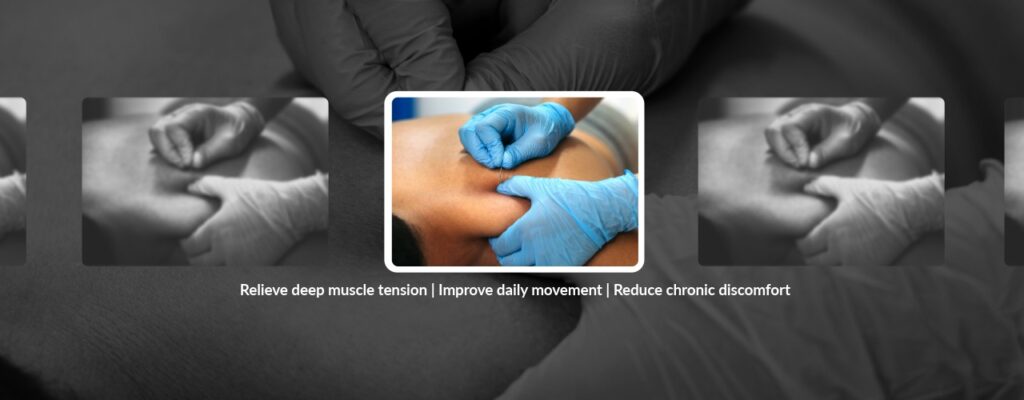
During a dry needling session, the therapist will locate tight muscle bands or trigger points by palpating the affected area. After cleaning the skin, a thin needle is inserted directly into the target muscle. This may trigger a local twitch response, which is a brief contraction that helps reset the muscle’s activity.
Sessions typically last between 15 and 30 minutes and may be combined with other physical therapy treatments such as joint mobilization, postural training, or guided exercises. Most patients require multiple sessions to experience lasting relief.
How Often Should You Schedule Dry Needling for Chronic Pain?
The frequency of treatment depends on the severity of your condition and how your body responds. Some patients feel improvement after just one or two sessions, while others benefit from ongoing care. Most treatment plans start with weekly visits and taper as symptoms improve.
Physical therapists at Western Slope Rehab & Performance will monitor your progress and adjust your care accordingly, ensuring that you receive the right balance of intervention and recovery time.
Does Dry Needling Replace the Need for Other Physical Therapy?
No. Dry needling is one piece of a comprehensive treatment approach. It helps reduce tension and improve tissue responsiveness so that patients can move more comfortably. Once mobility is restored, physical therapists focus on building strength, correcting movement patterns, and improving posture to prevent future flare-ups.
By using dry needling for chronic pain alongside evidence-based physical therapy strategies, patients often experience faster and more complete recovery.
Let’s Work Toward Relief That Lasts
Living with chronic pain can be frustrating, especially if it limits your ability to work, sleep, or stay active. You do not have to manage it alone. At Western Slope Rehab & Performance, our skilled physical therapists combine manual techniques, targeted exercise, and innovative treatments like dry needling for chronic pain to help you find relief that lasts.
Reach out today to schedule a personalized evaluation and begin a care plan that is built around your goals. We are here to support your recovery and help you move with confidence again.