

Stem Cell Injections vs. Surgery for a Torn ACL
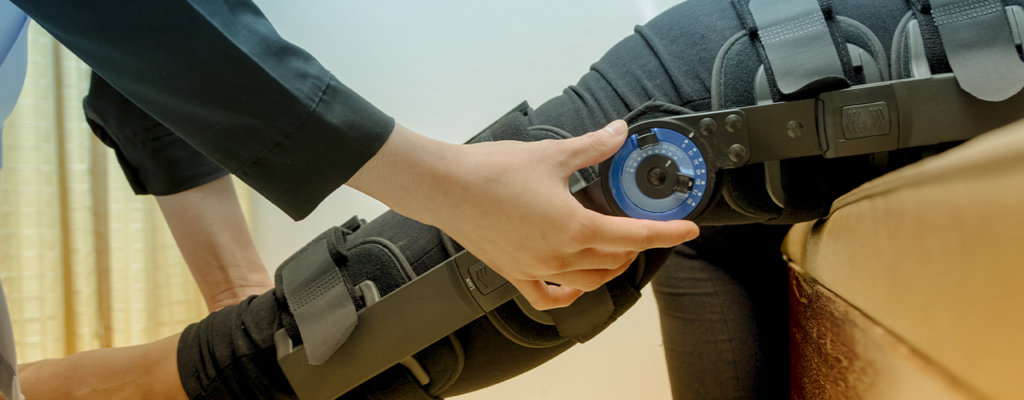
Everyone wants to avoid surgery, and that is especially true following a complete ACL tear (rupture). As most athletes know, ACL surgery means you will be out of commission from sports – as well as most recreational activities – for at least 6 months, and the risk of re-injury is concerningly high. Unfortunately, there aren’t many good alternatives to surgery for high-performing individuals unless you want to deal with the knee swelling up, popping, and occasionally giving way for the rest of your athletic career.
However, there’s a new kid on the block that purports to change that and get you back to the activities you love without surgery – stem cell injections. Unfortunately, the research surrounding this approach is still in its infancy, and the majority of the articles you will find online are written by doctors that make a living off performing these injections – a pretty clear conflict of interest. In this post, I am going to do an independent assessment of the effectiveness of stem cell injections after an ACL rupture to help you can make the best choice for your body.
What are Stem Cells?
Stem cells are found throughout your body and are used by your body for a variety of purposes. In this situation, the primary goal is regeneration of the ACL, and the stem cells are typically harvested from either bone marrow or fat. When the stem cells are injected into the injured knee, they begin to proliferate and turn into ligamentous tissue cells while also creating an environment conducive to healing.
What Does the Research Say About Stem Cell Injections for ACL Tears?
First off, I could not find any human studies in any medical research database that compared a stem cell injection vs. surgery for ACL recovery; this is clearly a new area of study that requires additional research, and if anyone tells you there is conclusive evidence that stem cells are better than surgery (or vice versa), they’re probably lying.
I was able to find 1 study that examined the effects of stem cells injections on recovery from a torn ACL. The study included 29 subjects with some type of ACL tear (validated with MRI), 10 of which were complete ruptures with less than 1 cm of retraction. The subjects first received a dextrose injection into the knee joint 2-5 days prior to the stem cell injection to create a pro-inflammatory environment inside the knee. The subjects then received an injection of platelet-rich plasma (PRP), platelet lysate, and bone marrow concentrate (BMC; the component that contains stem cells) into both the torn ligament and the surrounding area. The subjects then underwent a follow-up MRI between 2.6 to 42.3 months after the injections, with an average of 8.7 months.
What were the results? 75% of patients exhibited MRI findings that indicate ACL healing. Unfortunately, the study did not separate out the results based on the grade of ACL tear, so I have no way of knowing how many subjects with a full rupture experienced a restoration of their ACL. In addition, since there was no control group, we are unable to compare this improvement compared to a control (and spontaneous healing of a complete ACL rupture has been documented in the past).
As I noted above, there are multiple grades of ACL tears: partial tears, full non-retracted tears, and full retracted tears. In all three cases, a MRI is required to differentiate them. To the best of my understanding, stem cell injections only have the possibility to repair partial tears and full non-retracted tears. This makes sense, since the stem cells can only build upon an already-present scaffold of the injured ACL, and if the 2 ends have retracted away from each other, the stem cells can’t bridge that gap. I wanted to find out what percentage of full ACL tears are non-retracted, but I was unable to find that information.
What are the Pros and Cons of Stem Cell Injections for ACL Tears?
Let’s start with the pros, which are pretty easy. First, stem cell injections are a lot less painful. Typically, patients are able to walk out of the medical center where they received the injection that day, whereas most surgical patients can’t walk without crutches for 2-3 weeks. In addition, there is less pain with stem cell injections. Regenexx is a company that provides stem cell injections that has the best data on this procedure that I have found, and their data show that patients report an average of 2.3/10 pain one month after the procedure. This number is substantially higher at the one-month follow-up point in surgical patients.
The last two pros are contingent on the assumption that the stem cell effectively works to restore the ACL (which the current evidence does not convince me of). If this is the case, then individuals can return to sports/activity faster, typically in 3-6 months compared to the traditional 6–12-month time frame after surgery. In addition, you are retaining your original ACL, which probably means you are less likely to develop arthritis later in life, which is a finding we see in surgical patients.
Now for the cons. The biggest one is that this is a massive roll of the dice. The research is so new, you really don’t know what results you will get, and the results will likely depend on where you go for the injection (this is also true of surgery, but I think surgical results will be more uniform across the board than stem cell injections). In addition, stem cell injections are pricey – you’re looking at several thousand dollars – and it is most likely not covered by insurance. For most people, it will be cheaper to get surgery once insurance is factored into the equation. Third, we have no idea what the long-term outcomes are for stem cell injections. It could be that an injection will return your ACL to 80% of what it was before the tear, predisposing you to a higher risk of re-injury compared to if you had received surgery (the 80% is made up, FYI).
Summary
Stem cell injections for a complete ACL rupture is a new field of study with minimal research on its efficacy – and no research that I can find that directly compares it to ACL surgery. Recovery from an injection is shorter and less painful than surgery, but the long-term efficacy is unknown, and the injection will likely cost more than surgery when insurance is added to the equation. At the end of the day, if you’re a risk taker, need to get back to sports/activity within a few months for some reason, or really don’t want to have surgery, stem cell injections might be worth looking into. If I had to recommend a company to contact to learn more about if this is right for you, I would recommend Regenexx; from my research, they have one of the better reputations and have the most informative website of any I have come across.
You might be asking, “why either/or; can I combine stem cells or similar injections with ACL surgery?” I’m happy to say there is research answering that question, and that will be the topic of my next blog.
Western Slope Rehab and Performance is Here to Help
If you are struggling with injuries or have recently been in a motor vehicle accident, we can help. We are a physical therapy company that provides home-based orthopedic services in the Grand Junction, CO, area, as well as telehealth appointments throughout Colorado. If you would like to schedule a free consultation, you can call us as 970-462-9177, or fill out our contact form here.
If you found this post valuable, please like and share on our Facebook page, which is updated regularly with new content.