4 Pieces of Equipment to Have Ready When You Undergo ACL Surgery
Today is day 10 post-injury and I got my MRI results back. Honestly, I thought it would be worse. Instead of everything being torn (what it felt like), I just have an ACL rupture, lateral meniscus tear, MCL sprain, and bone bruising on the lateral femoral condyle and medial and lateral tibial plateaus. All that being said, the rate-limiting factor is the ACL rupture, which will require at least 6 months of rehab before returning to my prior level of function.
I imagine surgery is at least a week away, which hopefully gives me plenty of time to order all of the equipment I want on hand to help me kick ass at the early post-surgery goals – minimizing swelling, minimizing pain, and maximizing activation of the muscles around the knee. Today I am going to go through the equipment I plan on having on hand for use ASAP after surgery.
Equipment
1. Electrical stimulation (e-stim) unit
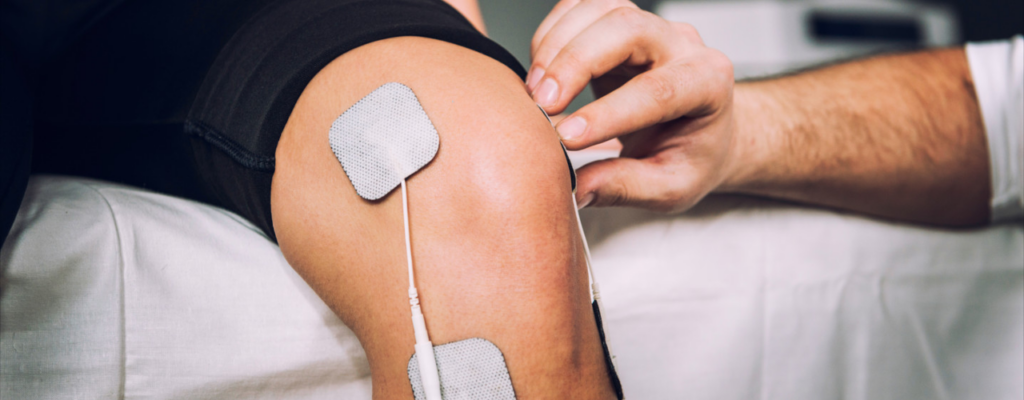
There are a couple reasons to have an e-stim unit handy after surgery. The use that most people are familiar with is pain control, which is a valid use but is not my primary interest. Instead, I want one of these units to produce near-constant, non-fatiguing muscle contractions in the muscles around the knee. In particular, I will be using this on my quadriceps almost all the time, as well as on the hamstrings (as long as it’s not contraindicated if I do end up having my meniscus repaired), calves, and possibly tibialis anterior.
In my opinion, this is probably the most important piece of equipment for my recovery in the first week. Following surgery, a lot of swelling is prone to build up around the knee as my body sends blood and nutrients to the area to heal the massive amount of damage done in surgery. The only way swelling is able to leave this area is through the lymphatic system, which is a collection of vessels that travel towards the heart. Inside these vessels are one-way valves, meaning that once swelling has been pushed up to a certain area, It cannot easily travel back down the leg (away from the heart).
The only way to stimulate the movement of fluid (swelling) through the lymphatic system is through compression, but not all compression is created equal.
The most common compression people use is static compression, such as an ACE wrap or compression sock. These are good – and I will definitely be wearing one – but this type of compression is most effective at keeping swelling from occurring (imperfectly), not shuttling swelling out of the area once it has already accumulated.
That brings us to the other type of compression – cyclical compression. The system our bodies evolved to eliminate swelling is muscle activation. Each time a muscle contracts, it compresses the lymphatic vessels in that region. By applying a low-intensity stimulation to the muscles around the knee, I hope to be able to reduce the amount of swelling around my knee to a much greater extent than if I just used ice and compression.
A quick note: what I have just described is different than using an e-stim machine to improve muscle activation. I will use it for that purpose as well a little later on in the rehab process, but it is absolutely imperative to focus on decreasing swelling prior to working on quad activation. The greatest impediment to quad function, outside of the nerve block given during surgery that wears off within hours of the surgery, is swelling in the knee.
2. Photobiomodulation device
Not everything I do has a lot of evidence supporting its use; this is one of those. Photobiomodulation (PBM) is a fancy work for modulating bodily function through the use of specific wavelengths of light. In this case, I will primarily be using red light and infrared light. This might seem ridiculous (maybe just a little), but since the downsides are almost non-existent and the cost of a portable machine is only $100-$200, it seems worth a shot.
The most widely recognized effect of PBM is that it increases the amount of adenosine triphosphate (ATP) in the tissues being stimulated. ATP is the energy “currency” of the body and is required for essentially all bodily functions. ATP is created primarily by the mitochondria inside of cells, and PBM acts as a catalyst for ATP production by activating one of the enzymes (cytochrome c oxidase) that makes the process work.
When undergoing surgery, there are two reasons that cells in the area die off – direct trauma and secondary injury. Direct trauma is straightforward: this is the injury directly caused by cutting open the skin, removing part of my patellar tendon to make the ACL graft, and drilling the new graft into the bone. Secondary injury is all the damage that occurs as the result of this direct trauma. This can include cells that were partially damaged during the injury but have a chance of healing, as well as all the cells surrounding the damaged cells that can be damaged by the cellular contents released from the dying cells. By using PBM, I am able to provide the cells at risk of secondary injury with an additional energy source, making it more likely that they will survive and not contribute to additional injury.
In addition, the energy requirements of all the cells around my knee are increased following surgery, and PBM again acts as a supplemental energy source to expedite the healing process.
3. Biofeedback Unit
Back to quad activation, and I will throw out a link to Mike Reinold because he’s the one who got me thinking about this.
First off, most people know about the use of neuro-muscular electrical stimulation (NMES), which is where you place pads over a muscle and run an electrical current through the muscle to artificially create a contraction. This is great initially after surgery if you don’t have the ability to actively contact the muscle (in this case, the quad), but once you can contract the quad, this approach does not simulate the way a muscle actually fires under active control, which is where biofeedback steps in.
To understand what I mean, we need to understand how muscle fibers are normally recruited. A muscle is made up of muscle fibers of varying sizes. Typically, if I were to activate the muscle myself, the smallest fibers would contract first, and as the contraction became stronger, the fibers would be recruited in a sequential order based on their size. NMES does the opposite; it actually recruits the largest fibers first, since they have the least resistance to contraction by an outside force, followed by the smaller fibers. This is problematic because you could go through the early phases of rehab with very little recruitment of the muscles that need to do the most work when you are recovered, but think you are doing great because your quad contraction seems so strong
Biofeedback is different. With biofeedback, you attach electrodes to the muscle you are interested in, but instead of activating the muscle, they simply provide feedback on how much the muscle is working. This allows you to “gameify” the process of improving muscle contraction by giving you reliable feedback about how much muscle recruitment you are producing. There has not been much research comparing biofeedback vs. NMES, but at least one study found that a group that used biofeedback post-ACL surgery had better quad strength at 6 weeks compared to a group that used NMES.
4. Blood flow restriction (BFR)
BFR has been all the rage recently. It works by taking a band, placing it around your upper thigh, and they making it tighter and tighter until you have reduced the blood flow to the leg by a certain percentage, which can vary. The pressure is only maintained for a few minutes, during which you perform exercises for the affected muscles. This prevents damage to the muscles from occurring due to too high of a load while providing the stimulus necessary to improving strength, without heavy weights. Since I will not be able to lift heavy weights post-surgery, this is one of the best ways to begin to restore strength in the early phases of rehab.
The research on the use of BFR after ACL surgery is very promising. A meta-analysis on the use of BFR after ACL surgery found that BFR consistent results in greater improvement in quadriceps muscle size (which is correlated with strength) from 2-12 weeks post-surgery.
Summary
There you have it. This is the first major surgery I will have undergone, but I hope that the combination of BFR, electrical stimulation, biofeedback, compression, and red-light therapy – in addition to nutrition and lifestyle factors – will help me to recover quad function and overall leg strength faster than expected.
Western Slope Rehab and Performance is Here to Help
If you are struggling with injuries or have recently been in a motor vehicle accident, we can help. We are a physical therapy company that provides home-based orthopedic services in the Grand Junction, CO, area, as well as telehealth appointments throughout Colorado. If you would like to schedule a free consultation, you can call us as 970-462-9177, or fill out our contact form here.
If you found this post valuable, please like and share on our Facebook page, which is updated regularly with new content.